Water for roots, not for reassurance.
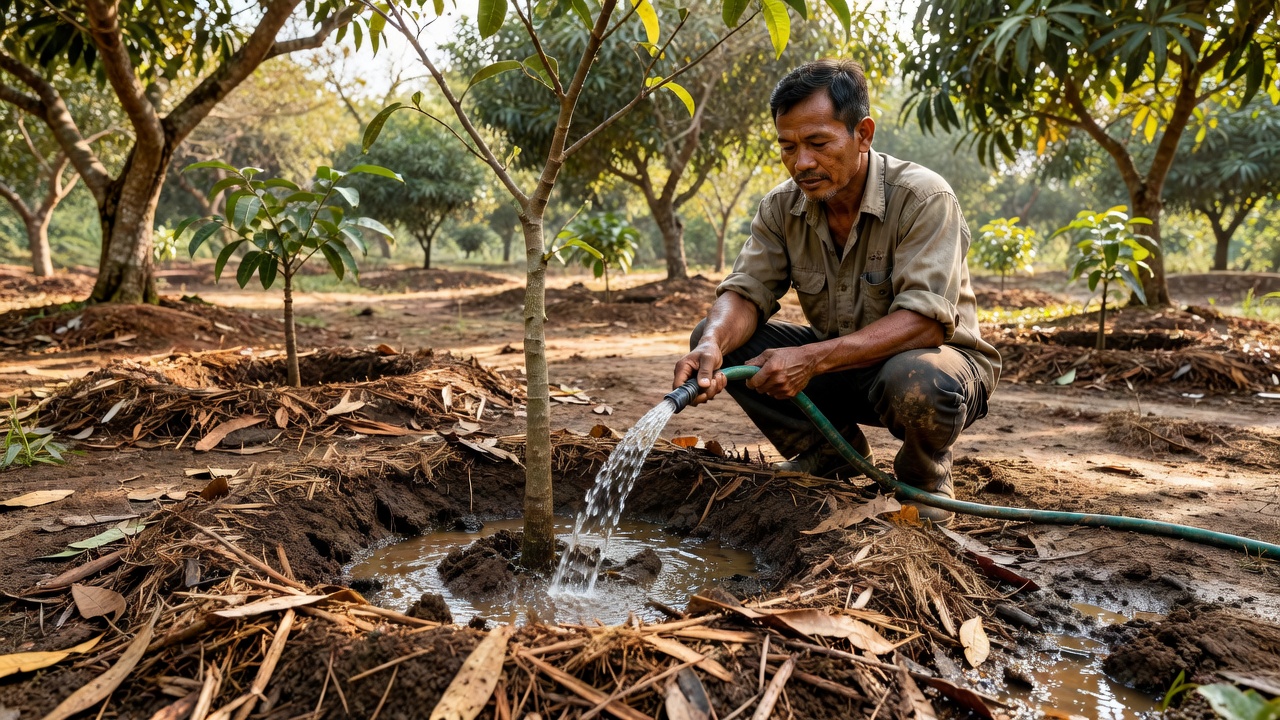
A newly planted tree and an established mango do not need the same irrigation routine. Young trees have a limited root system and may dry quickly within the original nursery root ball. Established trees can explore a larger soil volume, but their needs still change with heat, wind, rainfall, soil texture and crop load.
Check moisture below the surface before watering. Apply water slowly across the active root zone and let excess moisture drain. As roots spread, widen the watered area instead of repeatedly soaking only the trunk base. Keep mulch clear of bark and make sure irrigation equipment is delivering water where you think it is.
Containers need particularly close observation. A large canopy on a hot, windy day can use water rapidly, while the same pot may remain wet during a cool spell. A blocked drainage hole can turn an apparently dry surface into a misleading signal. Avoid leaving a mango container standing in a water-filled saucer.
Feed according to evidence and growth stage.
Fertiliser cannot compensate for waterlogged roots, insufficient light or an unsuitable climate. Start with soil information, tree age and observed growth. Where deficiencies are suspected, a laboratory leaf analysis interpreted using local sampling guidance can help distinguish nutrition from root or water problems.
Excess nitrogen can encourage leafy growth at the expense of a manageable fruiting canopy. Use an appropriate product at its labelled rate and avoid placing concentrated fertiliser against the trunk. Do not copy a commercial orchard programme into a small garden without understanding the soil, irrigation and production assumptions behind it.
Make flowering a period of observation.
Mango flower initiation responds to cultivar, shoot maturity and environmental conditions. Cool or seasonally dry conditions can influence flowering, but deliberately stressing a young tree is not a sound shortcut. Never withhold essential establishment water in an attempt to force fruit.
During bloom, note rain, humidity and insect activity. Mango flowers attract a range of small pollinating insects, including flies and bees. Avoid unnecessary insecticide use around open flowers. Persistent wet weather can favour anthracnose, while powdery mildew may occur under different conducive conditions. Inspect rather than assuming every blackened panicle has the same cause.
Most flowers will not become mature fruit, and early fruit drop is common. A tiny first crop is not necessarily a failure. If a small tree is carrying more fruit than its framework can support, selective thinning may protect developing branches and favour establishment.
Prune for access and light.
Begin with a clear purpose: remove dead or damaged wood, guide a balanced young framework, or maintain an accessible canopy. Use sharp tools, work from a safe position and avoid leaving torn bark. Clean tools appropriately, especially when moving between trees with suspected disease.
For many established bearing trees, light pruning soon after harvest provides time for new growth to mature before the next flowering period. That timing needs local adjustment. A late harvest near cool weather, for example, changes the risks. Heavy or badly timed pruning may remove potential flowering wood and delay the next crop.
Avoid stripping the canopy so abruptly that shaded branches are suddenly exposed to intense sun. Large trees, storm-damaged limbs and work near power lines require a qualified professional. A home fruit tree should not require climbing a ladder while holding cutting equipment.
Harvest maturity is not the same as softness.
Mangoes can be picked when physiologically mature and allowed to ripen off the tree. The challenge is identifying that stage for your cultivar. Look at fruit fullness, shoulders around the stem and any cultivar-specific changes in background colour. Red blush is not a universal maturity signal; ‘Keitt’, for example, can remain substantially green.
When unsure, test a small sample. Cut one likely mature fruit and examine flesh development, or let another ripen at room temperature and assess its aroma, texture and flavour. Keep notes so the next harvest decision becomes less speculative. Commercial maturity tests can be more precise, but home growers still benefit from repeatable observations.
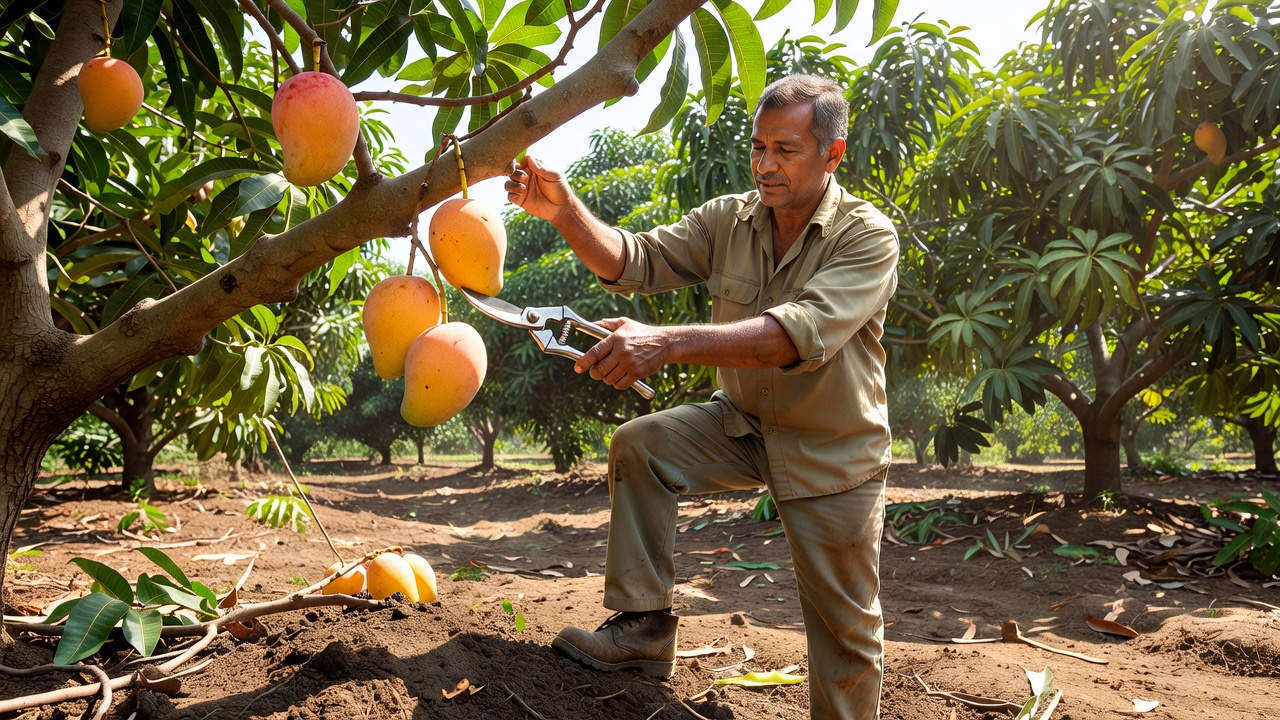
Use clippers, keep fruit shaded and avoid dropping it. Sap can burn the peel and irritate sensitive skin, so handle cut stems carefully and consider gloves. Wash hands and equipment after contact. Once eating-ripe, mangoes can be refrigerated briefly; very cold storage of immature fruit may cause injury and poor ripening.
Prepare for the next stress before it arrives.
Before a cold forecast, check young-tree protection and move manageable containers to a suitable sheltered position. Do not place heat sources or coverings where they create fire or damage risks. Before storms, remove loose objects and have unsafe limbs assessed. After heat, frost or wind damage, allow time for the extent of injury to become clear before major corrective pruning.