Make a short history before making a treatment.
When a mango changes suddenly, record the sequence. Did leaves wilt after heavy rain, a hot wind, repotting or a fertiliser application? Is one branch affected, the newest growth, or the whole canopy? A pattern across several trees may suggest a shared weather or irrigation event, while a localised patch may point elsewhere.
Take clear photographs of the whole tree, affected leaves on both sides, stems, trunk base and surrounding ground. Include an object for scale without damaging the plant. Keep notes on cultivar, tree age, planting date, irrigation, recent products and the timing of symptoms. This context makes advice from a local specialist far more useful.
- Check moisture below the surface, not only the appearance of mulch.
- Inspect the trunk base for buried bark, injury and persistent dampness.
- Compare old and new leaves, sunny and shaded sides.
- Look beneath leaves and along stems for insects or sticky deposits.
- Decide whether the problem is stable, improving or spreading.
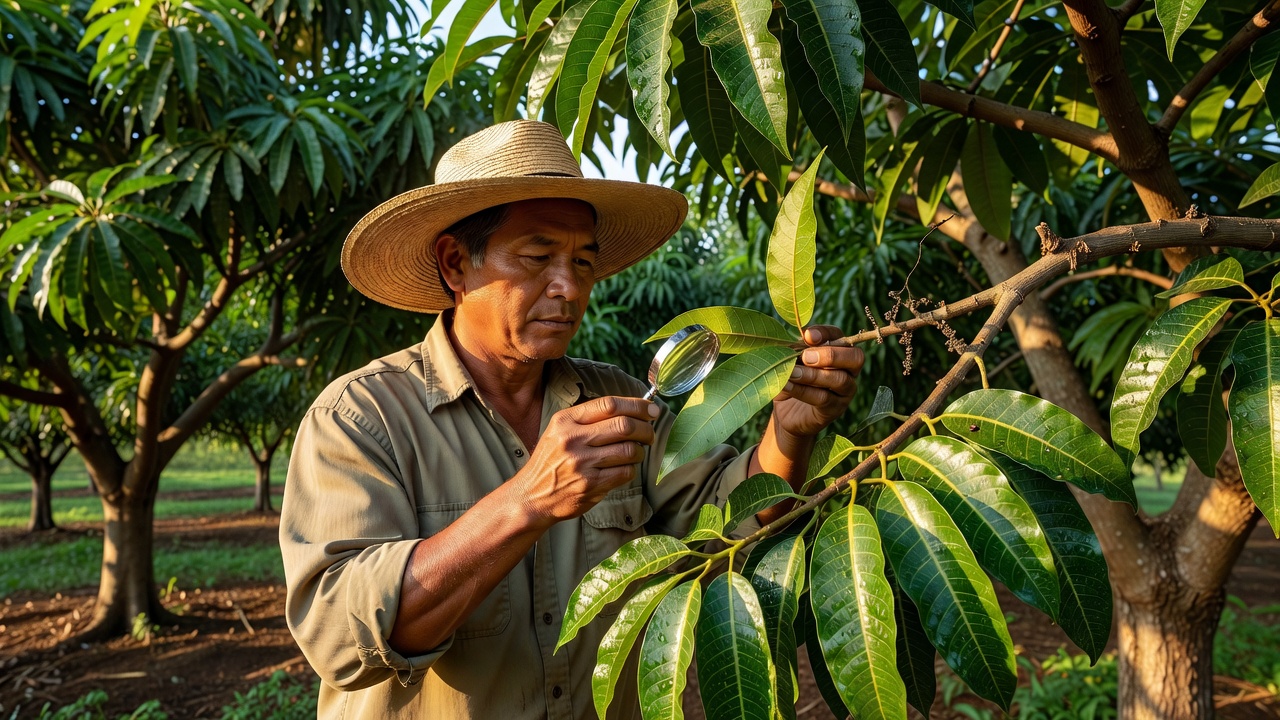
Yellow leaves have several possible explanations.
Occasional older-leaf yellowing and shedding can be part of normal turnover. Young mango flushes can also emerge bronze, reddish or pale before becoming green and firm. These changes should not automatically trigger a fertiliser application or spray.
More extensive yellowing can involve poor drainage, drought, salinity, nutrient imbalance or root injury. Interveinal chlorosis on young leaves can be associated with iron availability, particularly on alkaline soils, but a photograph alone cannot establish the cause. Check root conditions and consider soil or leaf testing before applying trace elements.
Brown tips and edges may follow salt accumulation, uneven moisture, fertiliser injury or environmental exposure. One-sided bleaching or scorch can indicate sudden sun exposure after pruning or moving a container. Frost-damaged growth may darken after the event. Let the pattern and recent history guide your investigation.
Wilting does not always mean dry soil. Roots in saturated ground can lose their ability to supply the canopy. Adding more water to a wet root zone may worsen the problem. Rapid decline after flooding deserves prompt local assessment, particularly if the trunk base or roots show deterioration.
Distinguish flower and fruit problems carefully.
Anthracnose, associated with Colletotrichum fungi, can affect flowers, young growth and fruit. Wet, humid conditions often favour infection, and fruit symptoms may become more obvious during ripening. Dark lesions are not proof on their own: mechanical injury, sap damage and other disorders can look similar.
Powdery mildew may produce pale, powdery growth on susceptible tissues and contribute to poor fruit set. Its favourable conditions differ from those of many rain-associated diseases. A failed flower panicle can also reflect cold, poor pollination or other stress, so do not identify a disease solely from lost flowers.
Improve accessible canopy structure, avoid unnecessary wetting of flowers and remove fallen diseased material where appropriate. These steps can support management but do not guarantee control. If a treatment is needed, use only products registered for mango and the target problem in your location. Follow the label, protective equipment requirements and harvest intervals. Homemade mixtures can burn tissues and are not automatically safer.
Find the organism behind the damage.
Scale insects and mealybugs can produce honeydew, which supports dark sooty mould. Ant activity may draw attention to these pests because ants often feed on the honeydew. Examine living insects on leaves and stems rather than treating the dark coating as the primary cause.
Thrips, mites and other small pests require closer examination and local identification. Not every insect near a mango is harmful; predators and pollinators also use the tree. Broad-spectrum sprays can disrupt helpful organisms and sometimes make secondary pests harder to manage.
Fruit flies are important in some regions, while mango seed weevil and other pests are subject to specific regional restrictions. Follow local biosecurity guidance for monitoring, sanitation and disposal. Do not move potentially infested fruit, seed or plant material across regulated boundaries, and do not assume a control method from another country is legal where you live.
Some fruit drop is expected.
Mango trees generally retain only a fraction of their flowers and tiny fruit. A carpet of very small fruit is not necessarily evidence of a pest or deficiency. Investigate further when drop is unusually severe for that tree, affects larger fruit, follows a clear stress event or occurs with visible lesions, feeding damage or canopy decline.
Look for changes in water supply, cold or heat during flowering, poor root health and disease pressure. Avoid trying several remedies at once. Multiple interventions make it harder to know what helped and may add avoidable stress.
Know when observation is not enough.
Seek local help for rapid dieback, trunk lesions, structural instability, unexplained widespread decline or a suspected regulated pest. A public extension office, plant diagnostic laboratory or qualified arborist can provide a more appropriate assessment than general online advice. Ask how to collect and package samples before sending them.