Observe a full day of sun and a spell of rain.
Choose a position with generous direct sunlight and enough room for the planned canopy. Trace shade from buildings and existing trees at different times of day. A position that is sunny in summer may be shaded during cooler months, when warmth is particularly useful. Keep access clear for watering, inspection and future pruning.
Drainage matters as much as light. Visit the spot after substantial rain and note where water gathers, how long it remains and whether runoff flows toward the trunk position. A surface that looks dry can hide a saturated layer below. If the garden has a high water table, compacted subsoil or repeated flooding, get local advice before committing to a tree.
Raised planting on a broad mound may help some moderately difficult sites, but it cannot make a persistently flooded location suitable. Avoid a steep, narrow mound that dries rapidly or exposes roots. Consider where surplus water will go without sending it toward buildings or neighbouring land.
Improve the growing area, not just the hole.
Mangoes grow in a range of soils when drainage and nutrition are suitable. A laboratory soil test is more useful than judging fertility by colour. Ask the laboratory for guidance relevant to fruit trees and your region. Soil pH, salinity and nutrient balance can influence root function and nutrient availability; adding lime, sulphur or trace elements without evidence can create new problems.
A mildly acidic to near-neutral soil is often suitable, but local soils and rootstocks differ. Mangoes can grow on some alkaline soils with appropriate management, while nutrient deficiencies may become more troublesome. Do not chase a single “perfect” pH number by applying repeated amendments without retesting.
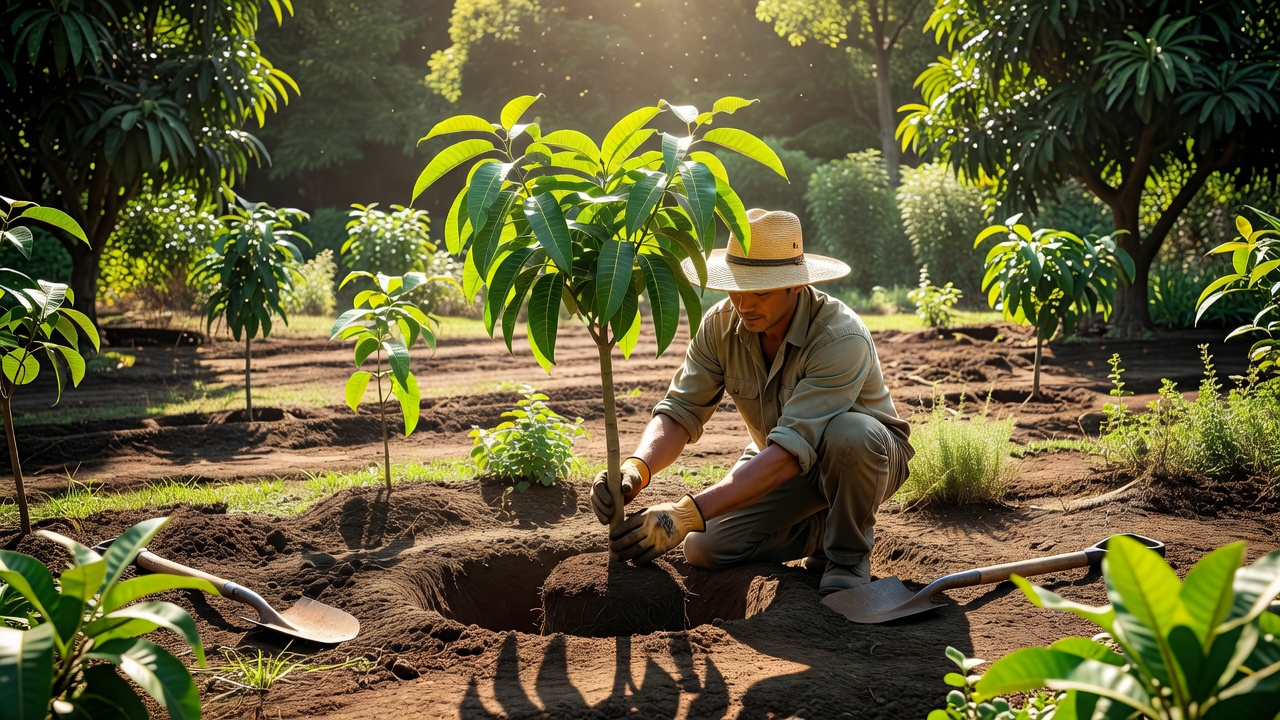
Dig a planting hole no deeper than the effective root ball and broad enough to work comfortably around it. Roughen smooth, smeared sides where necessary. Backfill primarily with the excavated native soil. A small, heavily composted pocket in dense ground can behave differently from the surrounding soil and discourage roots from spreading normally.
Do not put fresh manure or concentrated fertiliser against young roots. If the wider soil needs improvement, plan that work before planting and follow local recommendations. Check for underground utilities before digging, and avoid planting over drains or close to structures where roots and canopy will become difficult to manage.
Handle the root ball gently.
Plant when warm conditions support root growth and you can provide reliable follow-up care. In frost-prone margins, waiting until the risk of cold has passed is often sensible. In seasonal tropical climates, the beginning of reliable rains may help establishment, provided the site drains well and severe storms are not an immediate threat.
Water the nursery tree beforehand if its root ball is dry. Remove the container without pulling on the trunk. Inspect for major circling roots or a buried root flare; a seriously defective root system is a reason to pause and seek advice. Avoid unnecessarily breaking apart a healthy mango root ball, because root disturbance can set the tree back.
Set the tree so the root flare is not buried and allow for soil settling. Keep the graft union clearly above the finished ground. Backfill gently, water to settle the soil, and recheck the level. Mulch broadly around the tree but leave a clear gap around the trunk. Mulch should protect the soil, not hold damp material against bark.
Plan your tree’s first season.
Immediately
Check planting depth, water the root ball thoroughly and confirm that excess water can drain. Use temporary support only if needed, with ties that cannot cut into the trunk.
While establishing
Check moisture in the nursery root ball and surrounding ground. They can dry at different rates. Adjust watering to weather and soil, not a rigid daily instruction.
As growth resumes
Look for healthy new growth, weeds competing near the tree and ties becoming tight. Begin any feeding cautiously, following a locally suitable recommendation and product label.
A newly planted mango may need frequent checks without needing water every time. Probe below the surface with your finger or a suitable soil tool, taking care around roots. Water slowly enough to wet the root zone rather than merely darkening the mulch. Persistent wilting in wet soil is a warning to investigate drainage, not a reason to add more water.
Remove early flowers or fruit where needed to favour establishment of a small, weak tree. Avoid heavy pruning, heavy feeding and constant handling in an attempt to accelerate growth. Take a photograph at planting and keep a simple record of rainfall, watering and new shoots. Steady establishment is a better first-season outcome than an early crop.